2013 Game Developers Conference

I’m at the 2013 Game Developers Conference this week in San Francisco. This will be my second year attending the conference (recently, at least) and I’m very much looking forward to the events opening tomorrow.

The Independent Games Festival and Game Developer Choice Awards ceremony is presented tomorrow night and I’m happy to see FTL: Faster Than Light on both the Choice Awards and IGF nominee lists. I hope it wins the Seamus McNally Grand Prize, and at least one of the Choice categories it’s in.

I had a light day today, but on Monday my favorite panel was ‘Obsessive-Compulsive Development: A Postmortem of the Development of Retro/Grade’ with Matt Gilgenbach from 24 Caret Games. When I began developing last year I was determined to have fun and maintain a healthy balance with my day job and personal life. This presentation was a reminder of the consequences of not doing this, and reminders are good in this respect.

I also enjoyed a Kickstarter statistics panel by Thomas Bidaux. He presented the numbers well — video games enjoy a 30% project success rate — but I felt he didn’t emphasize that some projects should fail and the importance of asking for a realistic amount needed to both produce the project and keep the developers happy. For example, it’s easy to succeed if the amount asked is too low (ex $1), and I think ‘winning’ at Kickstarter shouldn’t be the first goal of the campaign design, it should be the project itself.

Alone in the Dark Postmortem

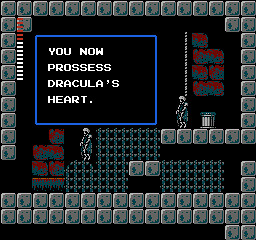
I frequently watch the GDC Vault: The Game Developer’s Conference video archive of conference panels. The Alone in the Dark postmortem, a presentation from last year’s GDC in San Francisco, is one of my favorites and covers the first PC adventure game I ever played. The presenter is fantastic, and it has a very good lesson and reminder about planning. The entire game was planned over a few days and the execution, which took many months, largely followed the overall plan and was very well done.

http://www.gdcvault.com/play/1015840/Classic-Game-Postmortem-Alone-in

Having a Plan

I am frequently reminded one of the most important and successful things I need to do for any project is to have a plan.  A plan going in, a plan of execution, and a plan for when the plan changes.

For the past two weeks I’ve spent a significant amount of time exploring social networks and related media services. Tonight I had a conversation on Twitter and a bit of meta about it:

https://twitter.com/KateKligman/status/313104416330887168

This can also be summarized as: “What am I trying to accomplish?” which I’ve found to be a significantly harder question to answer than: “How do I get there?”

3.11: Surviving Japan Premieres in San Francisco

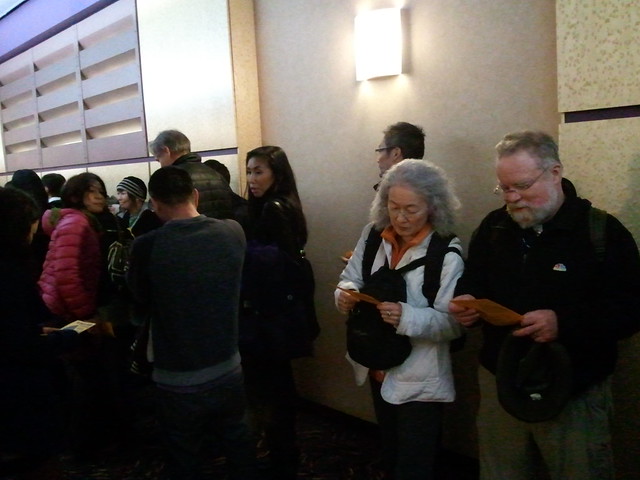
“No Nuke Rally” flyers were distributed at the Surviving Japan premiere in San Francisco

I first heard about the documentary 3.11: Suriving Japan through its Kickstarter funding drive.  The film is produced by American volunteer and filmmaker Christopher Noland, and is critical of the Japanese government’s response to the tsunami and Fukushima nuclear disaster.

I decided to back the Kickstarter and support the movie because  director Christopher Noland’s volunteer work seemed incredibly brave to me. He was in Tokyo during the tsunami and he could have gone back to America or stayed away from events. Instead, he risked higher radiation exposure and injury by volunteering near disaster areas and helping devastated communities while producing the film. I was also impressed with his continued efforts to bring the film to completion and have it shown in theaters.

The movie premiered on 3/11 in San Francisco and the turnout was significantly higher than I expected for an indie film. I asked several of the attendees where they were from and why they decided to come to the premiere. I was told there was an interest in the film because it was produced by an American and there was interest in an American perspective of the disaster. I also discovered many of the attendees lived in Japan and were here in San Francisco on vacation.

After the movie I talked with Jeff, an American expat, and his wife, both pictured above, who told me a story about how they were in America when the tsunami hit. They had the option to stay here, but decided to return to Japan as originally scheduled because it was their home. They described how packed flights from Japan were, and how the plane on their return flight home was almost completely empty.

Overall I enjoyed Surviving Japan. I would suggest the film to anyone interested in a realistic look at the cultural challenges of organizing post-disaster aid and also the Japanese government’s reaction by limiting information on aid benefits to survivors and critical information about radiation risks.

The Opened Way

This is one of my all-time favorite songs composed for a video game.  The music appears in the Shadow of the Colossus.

Fixing My WordPress 3.5.1 Dashboard Widget Layout

After I updated the WordPress on this blog to version 3.5.1 I could not save the order and location of my administration dashboard widgets.  No matter what arrangement I used, after a page refresh they stacked themselves out of order into the first column.

I explored the WordPress database and discovered the dashboard ordering information was correctly saved in the wp_usermeta table with the key meta-box-order_dashboard.  However, WordPress was reading an apparently older version of a similar key: wp_meta-box-order_dashboard.

I solved the problem by deleting the old key wp_meta-box-order_dashboard from table wp_usermeta. This caused WordPress to use the newer key (without the prefix) and now the administration widgets behave.